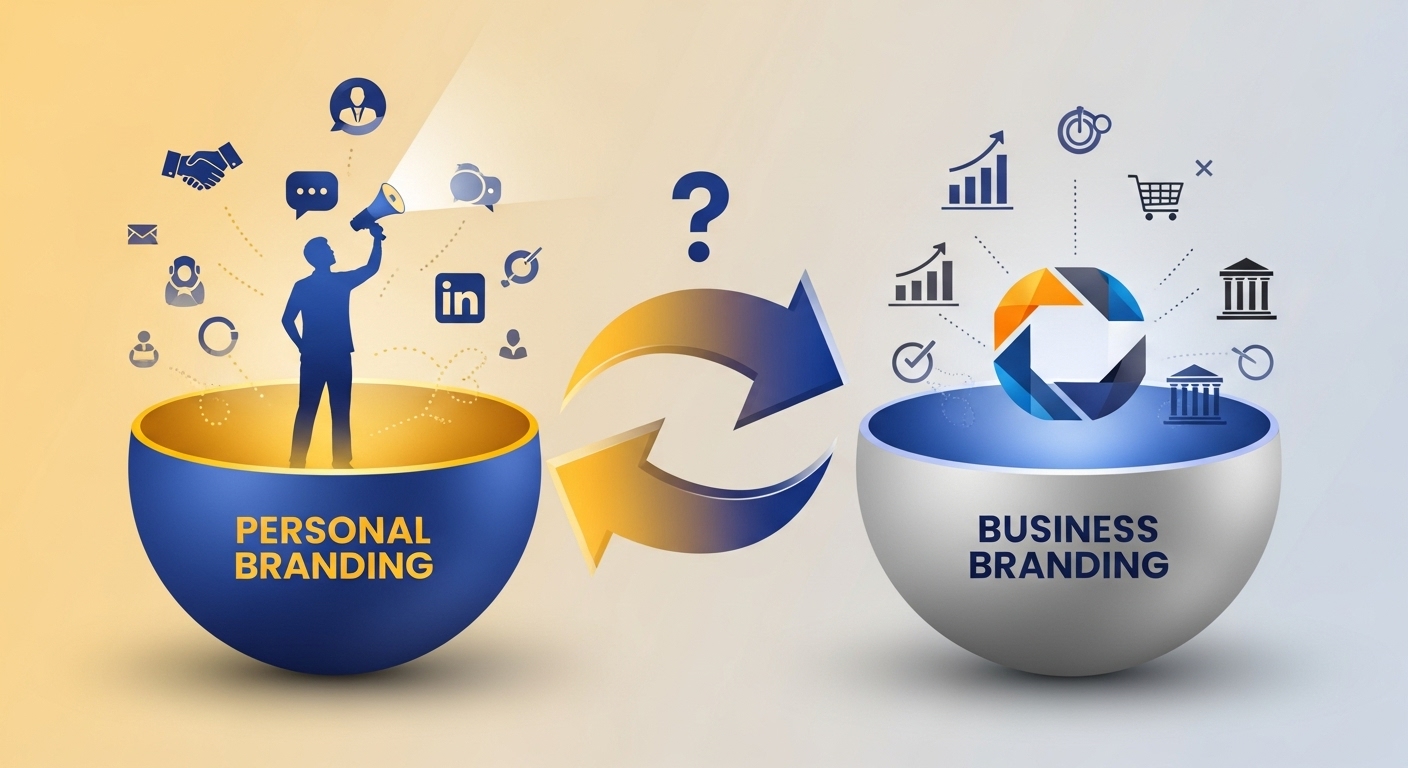
For decades, businesses invested heavily in corporate branding—logos, taglines, mission statements. But in 2025, a shift is happening: people trust people more than companies. CEOs, founders, and even employees are becoming the face of their organizations. This raises an important question for leaders: Should you focus on building your personal brand or your business brand first?
The Case for Personal Branding
1. Human Connection → Audiences relate more to humans than to logos. A leader’s voice can build trust faster than a company profile.
2. Flexibility → If your company pivots or fails, your personal brand still holds value.
3. Social Media Amplification → Platforms like LinkedIn, X (Twitter), and TikTok prioritize individuals over corporate pages.
🔹 Example: Elon Musk’s personal brand often overshadows Tesla and SpaceX, giving both companies a huge PR advantage.
The Case for Business Branding
1. Scalability → A strong business brand creates systems and assets that outlive individuals.
2. Trust at Scale → Consumers still expect professionalism, consistency, and reliability from a corporate brand.
3. Exit Value → If you plan to sell your company, its independent brand identity boosts valuation.
🔹 Example: Apple’s brand is larger than any of its executives. Even after Steve Jobs, Apple’s identity remained intact.
Striking the Balance in 2025
1. Early-Stage Businesses → Invest more in personal branding. Founders should be visible, approachable, and authentic.
2. Scaling Businesses → Shift toward business branding, ensuring systems, messaging, and customer experience are standardized.
3. Established Businesses → Blend both. Allow leaders to humanize the company while keeping the corporate identity strong.
Real-Time Trend (2025)
Right now, many startup founders are going viral on LinkedIn by sharing behind-the-scenes struggles, funding journeys, and lessons learned. Investors are increasingly drawn to the founder’s credibility rather than just the pitch deck.
Quick Tips for Leaders
✅ Share your expertise regularly (LinkedIn, Medium, podcasts).
✅ Align your personal values with your company’s mission.
✅ Use storytelling—audiences remember people, not corporate jargon.
✅ As you scale, transition your audience’s trust from you to your business.